- 16 sitesBoston Common to Bunker Hill
- 2.5 milesPainted red-line route
- $18–$47Guided tour tickets
- 4M+ a yearMore visitors than Yellowstone
- Free cancelUp to 24h before
What Is the Freedom Trail — and What the Daytime Version Leaves Out
The Freedom Trail is a 2.5-mile walking route through downtown Boston linking 16 nationally significant historic sites, from Boston Common in the south to the Bunker Hill Monument in Charlestown. A painted red line — brick where possible, paint where not — runs the full length through the city's streets. Conceived by journalist William Schofield in 1951, it now draws over 4 million visitors a year, more than Yellowstone National Park.
But the Freedom Trail was never just a story about revolution. It's also a story about executions, grave robbery, a man dismembered inside Harvard Medical College, and a woman hanged as a witch four years before Salem got around to it. That history is buried — sometimes literally — in the same cemeteries, cobblestone lanes and gas-lit churchyards you walked past this afternoon. The daytime walk shows you the sites; an evening tour gives you the full picture.
The 16 Official Sites
- Boston Common & Massachusetts State House
- Park Street Church & Granary Burying Ground
- King's Chapel & King's Chapel Burying Ground
- Old South Meeting House & Old State House
- Faneuil Hall, Paul Revere House & Old North Church
- Copp's Hill Burying Ground, USS Constitution & Bunker Hill
How Long It Takes
- Self-guided, all 16 sites: 3–4 hours (longer with museums)
- Guided walking tour: ~90 minutes, core sites
- Evening ghost & history tour: 60–90 minutes
- Trolley tour: ~90 minutes, seated, 2 on-foot stops
- Pro move: trail by day, guided tour after dark
Other Boston Experiences You Might Enjoy
Travellers who walk the Freedom Trail often pair it with one of these. Browse a hand-picked mix of Freedom Trail walking tours, the Ghosts & Gravestones trolley tour, haunted pub crawls, a Boston Harbor ghost cruise, North End food tours, Beacon Hill story walks and a Salem witch-trial day trip from Boston — live availability and prices below.
The Three Freedom Trail Sites That Transform at Night
Most daytime guides focus on the politics. These three burying grounds hold a different kind of history — and a different atmosphere after the lanterns are lit.
-
Granary Burying Ground
Founded in 1660, Boston's third-oldest cemetery holds Paul Revere, Samuel Adams, John Hancock and the five Boston Massacre victims. Roughly 5,000 people are buried here but only about 2,345 headstones remain — many no longer mark the graves beneath them. At night, lanterns lit and stones casting long shadows on Tremont Street, it's a different place entirely.
-
Copp's Hill Burying Ground
Established in 1659, the final resting place of over 10,000 people. British soldiers occupying Boston used the gravestones for target practice — you can still see the musket-ball scars on the headstone of Captain Daniel Malcom, "a true son of liberty." One of the few places in America where you can run your fingers across a documented act of Revolutionary violence. That's not folklore. That's stone.
-
King's Chapel Burying Ground
Boston's oldest cemetery, established in 1630 — the same year the city was founded. The governors, judges and colonial authorities who shaped early Massachusetts lie here. According to every ghost-tour guide who has ever worked in Boston, it's reliably the most unsettling of the three after dark — the 1688 chapel, the age of the stones, the narrow surrounding streets.
The History the Freedom Trail Doesn't Put on Its Signs
Boston's claim to be "the most credibly haunted city in America" rests on documented history that happens to be genuinely disturbing.
The first witch hanging was here
Goody Ann Glover, an Irish washerwoman, was hanged on November 16, 1688 — four years before the Salem trials. The Boston City Council now recognises November 16 as Goody Glover Day in her memory.
A Harvard professor's murder
Dr. John White Webster murdered Dr. George Parkman and dismembered his body inside Harvard Medical College. Webster was convicted and hanged in 1850, in a case that became a landmark in forensic science.
A book bound in human skin
The Narrative of the Life of James Allen, housed at the Boston Athenaeum just off the trail, is scientifically confirmed to be bound in human skin. It's a five-minute walk from Granary Burying Ground — and it is not a legend.
Real events, not tourist tales
These aren't ghost stories invented for visitors. They're documented historical events. The Freedom Trail simply doesn't put them on its official signage — which is exactly what an evening tour is for.
Freedom Trail Tours Compared: Self-Guided, Walking, Trolley and Pub Crawl
From a free self-guided walk to the most-reviewed ghost trolley in Boston — what each format costs, how long it takes, and who it suits. Check live dates and book directly below.
| Option | Cost | Duration | Best for |
|---|---|---|---|
| Self-guided | Free | 2–4 hours | Repeat visitors, your own pace |
| Official Freedom Trail walk | ~$18 | 90 min | First-timers, full political history |
| Ghost & history walk | ~$35 | ~75 min | Evening, the darker history |
| Ghosts & Gravestones trolley | ~$47 | ~90 min | Comfort, theatre, most-reviewed |
| Haunted pub crawl (21+) | ~$35 | ~2 hours | Adult groups, social night |
Official Freedom Trail Walking Tour
The best single introduction to what the Freedom Trail was built to commemorate. Costumed guides cover the core sites and tell the Revolution's story well — this is the tour most historians would recommend for understanding the political history. It doesn't cover the darker side; that's not what it's for. Pair it with an evening tour to complete the picture.
- Costumed 18th-century guides
- Departs from Boston Common
- Covers the core downtown sites in 90 minutes
- Family-friendly, all ages
- Best value daytime introduction to the trail
Also great for a deeper history-and-architecture angle: Boston's Freedom Trail Revolutionary Walking Tour (from $31, 2,000+ reviews).
Ghosts & Gravestones Trolley Tour
The most theatrically produced, most-reviewed ghost tour in Boston — and it covers two official Freedom Trail burying grounds on foot.
Boston: 1.5-Hour Ghosts and Gravestones Tour
The experience most Boston ghost-tour veterans recommend first. A costumed 17th-century gravedigger hosts a theatrical "frightseeing" ride that passes the streets associated with the Boston Strangler before stopping on foot at Copp's Hill and Granary — both official Freedom Trail sites. Why we pick it: the most social proof in Boston, the least walking, and the one that most reliably sells out on autumn weekends.
- Costumed gravedigger host, covered trolley
- Two on-foot Freedom Trail burying-ground stops
- Roughly 90 minutes after dark
- Free cancellation up to 24 hours before
Departs Old Town Trolley Stop #1, 200 Atlantic Avenue (Marriott Long Wharf). PG-13 — children under 6 not permitted; ages 6–12 must be accompanied by an adult.
Ghost & History Walking Tour
A lantern-lit walking tour through the oldest parts of downtown Boston, focused on the documented dark history of the Freedom Trail sites. These tours typically cover Granary and King's Chapel Burying Ground on foot, with stops outside the Omni Parker House and other sites tied to the city's more disturbing past. The intimate, ground-level option for those who want the history no one else is telling.
- Small-group lantern walk through downtown
- Granary and King's Chapel on foot
- Documented dark history, not jump scares
- Free cancellation up to 24 hours before
Meeting point is typically Boston Common or near King's Chapel — confirm when you book.
Haunted Pub Crawl Along the Trail
Three to four of Boston's most historically significant taverns, connected by ghost stories and colonial history. The pubs themselves are genuinely old — Boston's drinking establishments predate the Revolution — and the stories attached to them are well researched. This is not a novelty crawl; it's a legitimate history tour that happens to involve alcohol. Best for adult groups who want the stories with a drink in hand.
- 3–4 historic Boston taverns over ~2 hours
- Colonial history and true ghost stories
- Best for groups, birthdays and bachelorette nights
- Free cancellation up to 24 hours before
Prefer your crawl history-first? See the History Pub Crawl Along the Freedom Trail (from $50, 290+ reviews).
When to Walk the Freedom Trail — and When to Book Ahead
The trail is year-round; the tours are not always. Here's how the seasons play out.
Year-round trail
The trail itself never closes and the burying grounds are open during daylight hours every day. Guided tours run spring through autumn, with some operators running year-round.
October is hardest to book
Ghost tours sell out weeks ahead from mid-September through Halloween, particularly the trolley. Saturday nights in October routinely fill weeks in advance — book the moment your dates are confirmed.
Winter is underrated
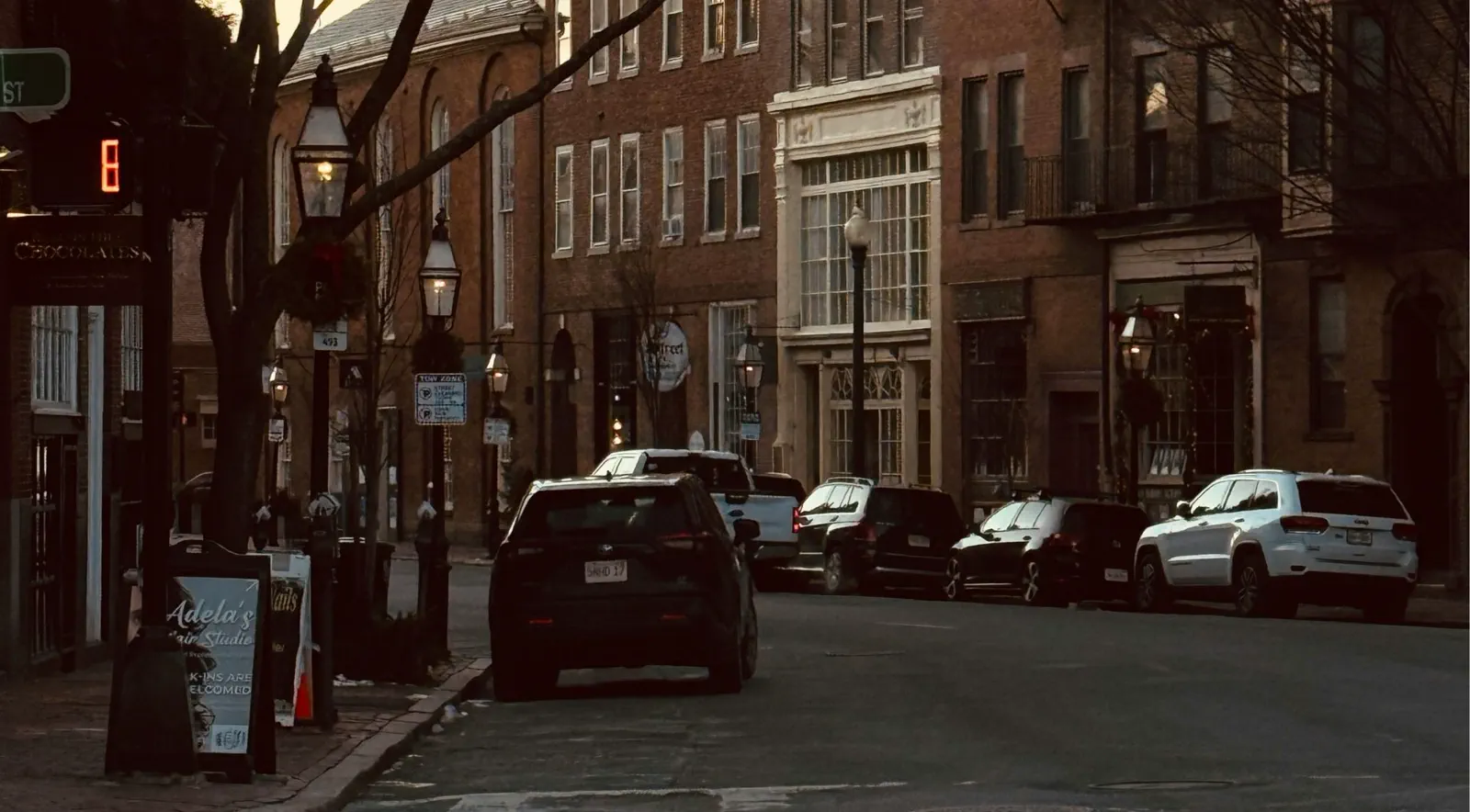
Crowds drop sharply after Halloween, prices ease, and the Freedom Trail in January — empty, cold, gas lamps lit — is arguably the most atmospheric time to walk it. Check winter schedules in advance.
Spring & early autumn sweet spot
Comfortable walking weather, manageable crowds, and ghost-tour availability without the October scramble. The easiest time to be spontaneous.
Freedom Trail Logistics: Where to Start, Parking, Shoes and Meeting Points
The handful of practical things worth sorting before you set out.
Where it starts
Boston Common, at the corner of Tremont Street and West Street. The visitor information centre is at 139 Tremont Street.
Parking & transit
Don't drive — downtown parking is expensive and the trail is walkable from most central hotels. Closest T stops: Park Street (Green & Red Lines) and Boylston (Green Line).
Footwear
Cobblestones. Proper walking shoes or trainers — not the place for new shoes or anything with a heel.
Trolley meeting point
Ghosts & Gravestones departs Old Town Trolley Stop #1, 200 Atlantic Avenue (Marriott Long Wharf). Easy walk from South Station (Red Line) and Aquarium (Blue Line).
Walking-tour meeting point
Typically Boston Common or near King's Chapel — confirm when you book.
Plan your time
Allow half a day for the trail. Combining it with an evening ghost tour? Give it the full day — morning on the trail, afternoon at leisure, evening on the tour.
Boston Freedom Trail Tours: Common Questions
Cost, duration, how scary, kids, weather and how far ahead to book — answered.
Is the Freedom Trail free?
The trail itself is free to walk — a painted red line links all 16 sites and you can follow it on your own at no cost. Guided tours run from around $18 for the Official Freedom Trail walking tour up to about $47 for the Ghosts & Gravestones trolley. Entrance fees apply at some indoor sites including the Old South Meeting House and the Old State House.
How long does the Freedom Trail take?
Walking all 16 sites end-to-end takes roughly two to three hours at a casual pace, not counting time inside the museums — allow 3 to 4 hours self-guided if you go in. A guided walking tour covers the core sites in about 90 minutes, and an evening ghost or trolley tour runs 60 to 90 minutes focused on the most atmospheric stops.
How scary are the Freedom Trail ghost tours?
Boston's ghost tours lean on documented history rather than jump scares. The Ghosts & Gravestones trolley is theatrical and atmospheric with a PG-13 rating, while the walking tours are more story-led than frightening. If you want genuinely unnerving history told well after dark, that is exactly what they deliver.
Can children do the Freedom Trail ghost tours?
The Ghosts & Gravestones trolley does not permit children under 6 and requires ages 6 to 12 to be accompanied by an adult. Walking ghost tours vary by operator, so check the individual listing. The Freedom Trail itself is excellent for children of all ages, and the daytime Official Freedom Trail tour is family-friendly.
Do the Freedom Trail ghost tours run in the rain?
Most run rain or shine. The Ghosts & Gravestones trolley is covered; walking tours proceed in light rain. Check the specific cancellation policy when you book — most tours listed here offer free cancellation up to 24 hours before departure.
What is the difference between the walking tour and the trolley?
A walking tour covers roughly a mile on foot through downtown in small groups at close proximity to the sites. The Ghosts & Gravestones trolley covers more ground from a covered seat and is more theatrical, with a costumed host and two on-foot burying-ground stops at Copp's Hill and Granary. Both visit Freedom Trail sites; the trolley is better for cold nights or anyone who prefers not to walk a full mile. See our full walking vs trolley vs pub crawl comparison.
How far in advance should I book a Freedom Trail tour?
For October, as far ahead as possible — ghost-tour weekends sell out weeks in advance, especially the trolley. For other months a few days' notice is usually enough, though booking early guarantees your preferred time slot. Most tours listed here offer free 24-hour cancellation if your plans change.